

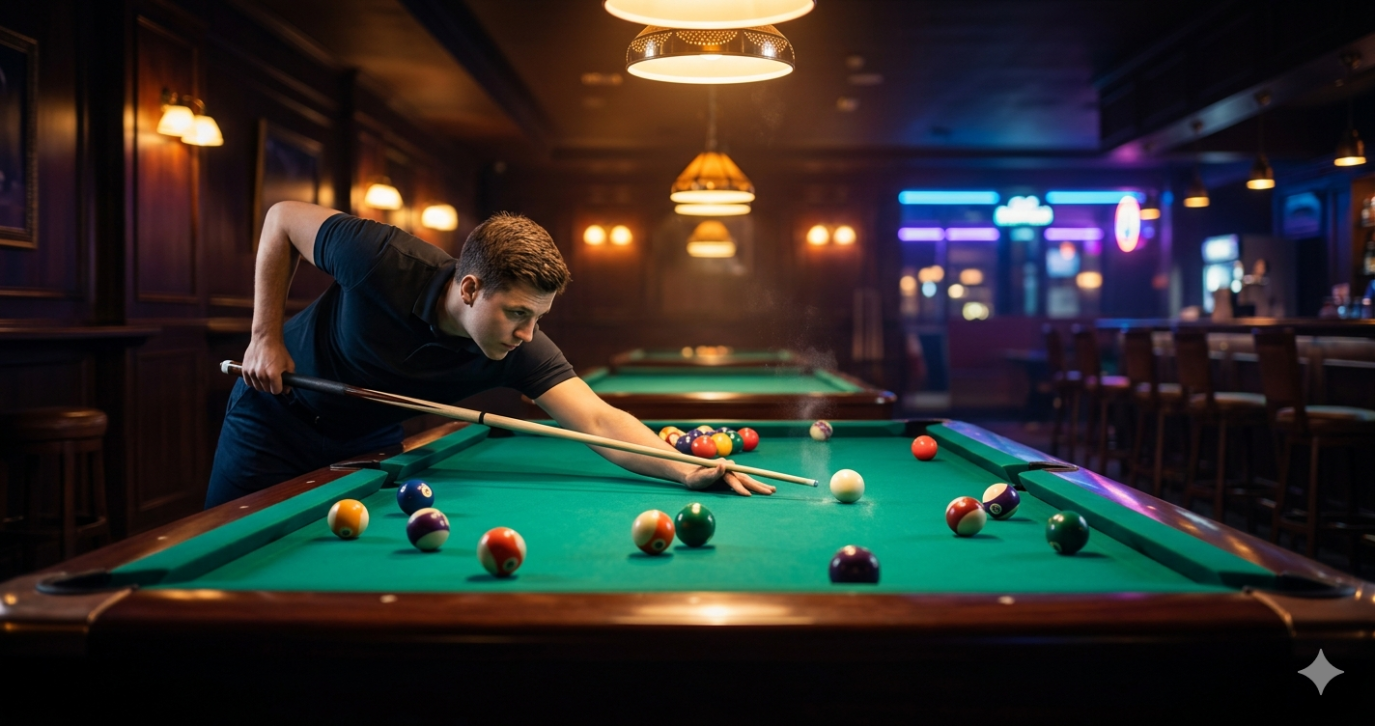

Every great pool player started somewhere. Maybe it was a wobbly bar table at a friend's house, or maybe it was the first time you picked up a cue and realized the cue ball had absolutely no intention of going where you aimed it. Sound familiar? Whether you're a total newcomer or someone who's been playing casually for years without really improving, this guide is for you. And if you want to put these tips into practice on some of the best tables in Southwest Florida, Diamond Billiards at 1242 SW Pine Island Rd in Cape Coral is the place to make it happen.
Start with the Basics Before You Touch the Fancy Stuff
A lot of beginners make the mistake of trying to copy trick shots they saw on YouTube before they've even nailed down the fundamentals. Here's the truth: the fundamentals are what separate players who improve from players who plateau. Everything in billiards builds on a solid foundation, so let's talk about what that actually looks like.
Your Stance Is Everything
If you're standing awkwardly over the table, your shots will be awkward too. A good stance starts with your feet. Stand with your dominant foot slightly forward, about shoulder-width apart, and angle your body so you're comfortable leaning down toward the cue ball without straining. Your chin should be close to the cue, almost like you're using it as a sight line, because you basically are. A stable, repeatable stance means every shot starts from the same position, and consistency is the whole game.
Master Your Bridge Hand
Your bridge hand, the one resting on the table that guides the cue, is one of the most overlooked fundamentals. Beginners often rest their hand flat and loosely, which creates inconsistency. Instead, practice an open bridge by spreading your fingers firmly on the felt and raising your knuckles to create a groove for the cue to slide through. Once that feels natural, you can experiment with a closed bridge for more precise shots. Either way, your bridge should feel solid, not flimsy.
The Mental Approach: Pool Is a Thinking Game
One of the reasons pool is so endlessly fascinating is that it rewards patience and strategic thinking just as much as it rewards physical skill. Beginners often rush, lining up a shot and firing away without thinking two moves ahead. Sound pool players, even at a casual level, are always asking the same question: where is the cue ball going after it hits the object ball?
Think About Cue Ball Position
The shot you're taking right now matters, but the position of the cue ball for your next shot matters just as much. This concept is called position play, and it's what separates players who run three or four balls in a row from players who sink one and then hand the table back to their opponent. Start thinking about every shot as two shots: the one you're making and the one you're setting up next. It changes everything.
Slow Down and Breathe
This sounds simple, but it's genuinely one of the best things you can do. Before every shot, take a breath, survey the table, decide on your shot, and then execute without second-guessing yourself. Hesitation and last-second changes of plan are the enemies of good pool. Commit to your shot, follow through smoothly, and evaluate the result afterward. You'll learn faster and feel more in control.
Practical Drills That Actually Make You Better
Reading tips is one thing, but you improve at pool by playing pool. Here are some specific practice habits that can genuinely move the needle on your game in a short amount of time.
- The Straight Line Drill: Place the cue ball and an object ball in a straight line toward a pocket and practice sinking the object ball while keeping the cue ball as still as possible. This trains you to strike the cue ball cleanly through the center.
- The Stop Shot: A well-executed stop shot means the cue ball stops dead when it hits the object ball. This is one of the most useful skills in pool and requires hitting the cue ball at exactly the right spot. Drill this repeatedly.
- Ghost Ball Aiming: Imagine the cue ball at the exact spot it would need to be when it contacts the object ball to send it toward the pocket. That imaginary ball is your ghost ball, and aiming for it is one of the clearest ways to understand angles in billiards.
- Rail Running: Place balls along the rail and practice pocketing them while keeping the cue ball under control. Playing along the rails is a skill most beginners avoid, but mastering it opens up a huge range of shots.
- Break Practice: A powerful, consistent break is one of the highest-value skills in the game. Set up the rack and practice your break shot repeatedly, focusing on hitting the head ball cleanly and generating spread without losing cue ball control.
Play with Better Players Whenever You Can
There is no faster way to improve than spending time at the table with people who are better than you. Watching how they plan shots, handle pressure, and move the cue ball around the table teaches you things no drill ever could. Don't be intimidated, most experienced players love sharing the game with newcomers. At Diamond Billiards, there's always a mix of skill levels on any given night, and that's part of what makes the environment so great for players who are working on their game.
Come Practice at the Best Tables in Cape Coral
All the tips in the world mean nothing if you're not actually playing. Diamond Billiards, the largest pool hall in Southwest Florida, offers a welcoming, energetic environment where you can work on your game, meet other players, and genuinely have a great time doing it. With a full bar, great food, and tables ready to go, there's no better place in Cape Coral to start your billiards journey or level up the game you already have.
Stop by at 1242 SW Pine Island Rd, Suite 4, Cape Coral, or give us a call at (239) 573-7665. Whether you're a first-timer or a seasoned regular, there's always a table waiting for you at Diamond Billiards. Rack 'em up and let's play.