

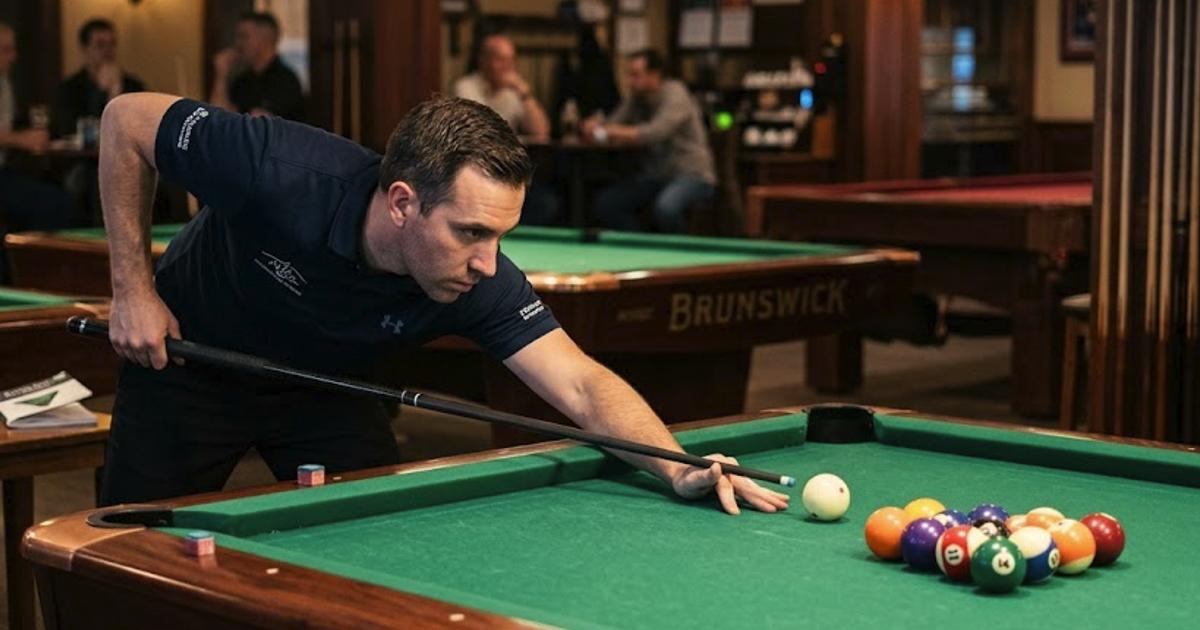

At Diamond Billiards in Cape Coral, you’ll see all kinds of players at the tables—casual shooters, league competitors, and those quietly working on their game between conversations and laughs. But if you watch closely, the players who consistently improve aren’t always the ones playing the most games. They’re the ones playing with intention.
Pool isn’t just repetition. It’s awareness, adjustment, and understanding what each shot is really teaching you.
Playing More Isn’t the Same as Playing Better
A common misconception in pool is that improvement comes from volume alone. While time at the table matters, improvement actually comes from how that time is used.
Purposeful players tend to:
- Notice why they missed a shot, not just that they missed it
- Adjust stance, grip, or aim instead of repeating the same approach
- Think one or two shots ahead instead of reacting moment to moment
- Learn patterns instead of memorizing individual shots
At Diamond Billiards, this mindset separates recreational play from real progression.
The Table Always Gives Feedback—If You Listen
Every shot tells a story. The cue ball doesn’t lie, and neither does the outcome of your position play. Players who improve quickly develop a habit of reading the table instead of just reacting to it.
That feedback shows up in small ways:
- Speed control errors revealing timing issues
- Missed angles showing aiming inconsistencies
- Position failures exposing poor shot planning
The table is constantly communicating. The question is whether the player is paying attention.
Why Rhythm Matters More Than Power
One of the biggest shifts in player development is learning that rhythm beats force. Smooth, repeatable motion creates consistency, while rushed or overly powerful play breaks it.
You can often spot experienced players by how unforced their game looks:
- Consistent pre-shot routine
- Controlled breathing between shots
- Calm decision-making under pressure
- Minimal wasted movement
At Diamond Billiards, league nights and casual games alike show that rhythm is what keeps good players steady when the pressure builds.
Purpose Turns Casual Games into Practice Sessions
Not every visit to the table has to feel like structured training—but every visit can still build skill. Even casual games become more valuable when players add small intentional goals.
For example:
- Focusing on cue ball control instead of just making shots
- Practicing safety play instead of always going for offense
- Challenging yourself to plan two shots ahead
- Watching how opponents recover from mistakes
These small shifts compound over time, turning regular play into real development.
The Players Who Improve Never Stop Observing
The most consistent improvement doesn’t come from talent alone—it comes from observation. The players who grow fastest are the ones who stay mentally engaged even when they’re not at the table.
They watch:
- How better players approach difficult layouts
- How pressure changes decision-making
- How positioning separates average from advanced play
- How tempo shifts during competition or league play
At Diamond Billiards, that environment is always active—there’s always something to learn if you’re paying attention.
Play with Purpose, and the Game Starts Changing
Improvement in pool doesn’t happen in a single breakthrough moment. It builds slowly through awareness, repetition, and intentional play.
The difference is simple:
Some players just play the game. Others use every game to improve it.
And in a place like Diamond Billiards, that difference shows up quickly on the table.