

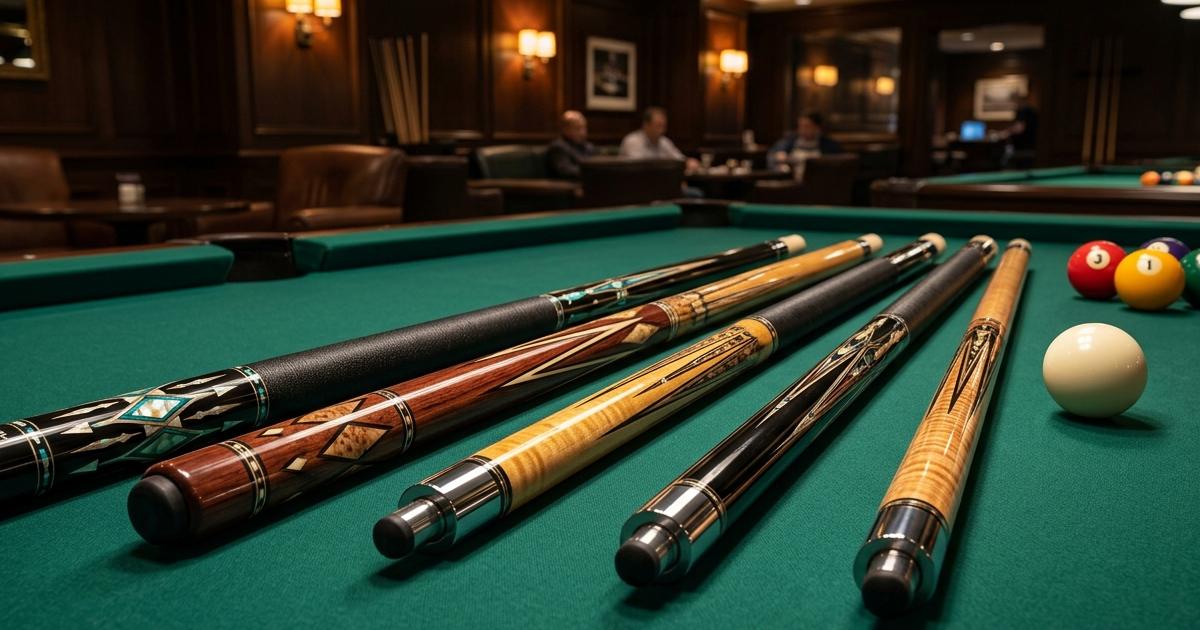

Walk into Diamond Billiards, Southwest Florida's largest pool hall at 1242 SW Pine Island Rd in Cape Coral, and you'll notice something right away — serious players have their own cues. They carry them in sleek cases, set them up with care, and play with a confidence that comes from knowing their equipment. If you've ever wondered whether choosing the right pool cue actually makes a difference, the answer is a resounding yes. The right cue can transform your game in ways you won't believe until you experience it for yourself.
Whether you're picking up a stick for the first time or looking to upgrade from the house cues on the rack, understanding what makes a great pool cue for your skill level is the first step toward playing better, feeling more comfortable, and actually enjoying the game more. Let's break it all down so your next trip to Diamond Billiards is the start of something seriously fun.
Why Your Pool Cue Matters More Than You Think
Many casual players assume all pool cues are basically the same. You grab one off the wall, chalk up, and shoot. But experienced players know the truth — a cue is an extension of your body. Its weight, length, tip hardness, and shaft taper all influence how the cue ball reacts when you strike it. When you use a cue that doesn't suit your style or skill level, you're essentially fighting against your own equipment.
House cues at most venues are functional but often warped, worn, or inconsistent in weight. They're fine for a casual evening, but if you're visiting Diamond Billiards regularly — whether to play leagues, practice, or compete — investing in your own cue is one of the smartest moves you can make as a player.
The Connection Between Equipment and Confidence
There's a psychological element to using your own cue. You know how it feels in your hands. You trust it. That trust reduces hesitation and helps you commit to shots with confidence. And in billiards, confidence is everything. When you stop second-guessing your stick, you start focusing entirely on strategy, position, and execution.
Key Factors to Consider When Choosing a Pool Cue
Selecting a cue isn't complicated, but there are several key factors that make a real difference in how a cue performs for you. Here's what to pay attention to:
Weight
Pool cues typically range from 17 to 21 ounces, with 19 to 20 ounces being the most common choice for recreational players. Lighter cues allow for faster strokes and are often favored by players who rely on finesse and spin. Heavier cues provide more power and stability, which can help beginners develop a more controlled stroke. The best advice? Pick up a few different weights and see which one feels natural in your hand. Your body will tell you what it prefers.
Length
Standard cues are 57 to 58 inches long, which works well for most adults. If you're shorter in stature or playing in a space where the walls are close, a shorter cue — around 48 to 52 inches — might be more comfortable. Conversely, taller players sometimes prefer a slightly longer shaft. The goal is to feel balanced and comfortable at the table without reaching awkwardly or crowding yourself.
Tip Hardness
The tip of your cue is where the magic happens. It's the point of contact between your stick and the cue ball, and its hardness significantly affects ball spin and control.
- Soft tips grip the cue ball longer on contact, providing more spin and control — ideal for advanced players who love shaping shots with English
- Medium tips offer a nice balance between spin and consistency, making them a great all-around choice for intermediate players
- Hard tips deliver a more predictable, straightforward hit with less spin — excellent for beginners still mastering a straight stroke
Shaft Taper and Material
The shaft is the front portion of the cue that slides through your bridge hand. A conical taper gets thinner toward the tip more gradually, which many players find easier to control. A pro taper stays thin for a longer section before flaring out, offering a more consistent feel through the stroke. As for materials, most cues use maple wood for the shaft due to its straightness and durability. Higher-end cues may feature carbon fiber shafts, which resist warping and deflect less on off-center hits.
Matching a Cue to Your Skill Level
One of the most important things to understand is that not every cue is right for every player. The features that benefit an experienced competitor may actually work against someone who is still learning the fundamentals.
For Beginners
If you're just getting started with pool at Diamond Billiards, keep it simple. Look for a one-piece or basic two-piece cue in the 19 to 20 ounce range with a hard or medium tip. You don't need elaborate inlays, fancy wraps, or exotic materials. What you need is a consistent, straight cue that holds up well and gives you a reliable hit every time. Spending somewhere in the range of $50 to $100 on an entry-level cue is a smart investment that will immediately improve your experience over using house cues.
For Intermediate Players
Once you've developed a consistent stroke and started experimenting with draw shots, follow shots, and English, it's time to upgrade. An intermediate cue — typically in the $100 to $300 range — will offer better craftsmanship, a more refined tip, and improved shaft quality. At this level, you might also start considering a cue with a medium tip to open up your shot-making options and give you more feedback through each stroke.
For Advanced and Competitive Players
If you're joining pool leagues at Diamond Billiards and playing seriously, your cue becomes a real tool of the trade. Advanced players often look for low-deflection shafts, premium tips, and carefully balanced weight distribution. Many also choose cues with a separate break cue — a heavier, harder-tipped stick designed specifically for the power of the opening break — to preserve their playing cue for precise shot-making throughout the game.
Don't Forget Cue Maintenance
Once you find the perfect cue, take care of it. Wipe down the shaft after every session to remove chalk and skin oils that can cause the wood to swell. Store your cue vertically or horizontally in a cue case — never leaning against a wall for extended periods, which can cause warping. Replace the tip when it becomes mushroomed or too smooth to hold chalk properly. A well-maintained cue will serve you for years and continue to play like the day you first broke it in.
Come Try Your Stick at Diamond Billiards
The best way to know if a cue is right for you is to play with it. Diamond Billiards in Cape Coral is the perfect place to do exactly that. With a full set of quality house cues available and plenty of table time to experiment, you can get a real feel for what works for your game. And when you're ready to bring your own stick, you'll feel right at home on our tables alongside fellow enthusiasts who share your passion for the game.
Whether you're a weekend warrior looking to sharpen your skills or a serious league player aiming to compete at a higher level, Diamond Billiards has everything you need. Stop by at 1242 SW Pine Island Rd, Suite 4 in Cape Coral, give us a call at (239) 573-7665, or simply walk in and rack 'em up. Your perfect game is waiting — and now you know exactly what to bring to it.