


If you've ever watched a skilled pool player glide effortlessly around the table, sinking shot after shot with pinpoint precision, you might have wondered what their secret is. Sure, practice matters. Experience matters. But before any of that can kick in, there's something far more fundamental going on — and it starts with how they hold the cue. That's right. Your grip is everything. And if yours is off, no amount of strategy or table time will fully save you.
At Diamond Billiards in Cape Coral, we see players of all skill levels walk through our doors every day. And one of the most common issues holding casual players back isn't their aim, their stance, or their shot selection — it's the way they're holding the cue. The good news? This is one of the easiest things to fix, and once you do, your game will transform almost immediately. Let's break it all down so you can show up to your next night at Diamond Billiards and play like you mean it.
Understanding the Two Key Points of Contact
When you hold a pool cue, you're really managing two separate points of contact — your bridge hand and your grip hand. Both matter enormously, and they serve completely different purposes. Getting comfortable with each one independently before combining them is a smart approach for beginners and players who are trying to break bad habits.
The Bridge Hand: Your Guiding Force
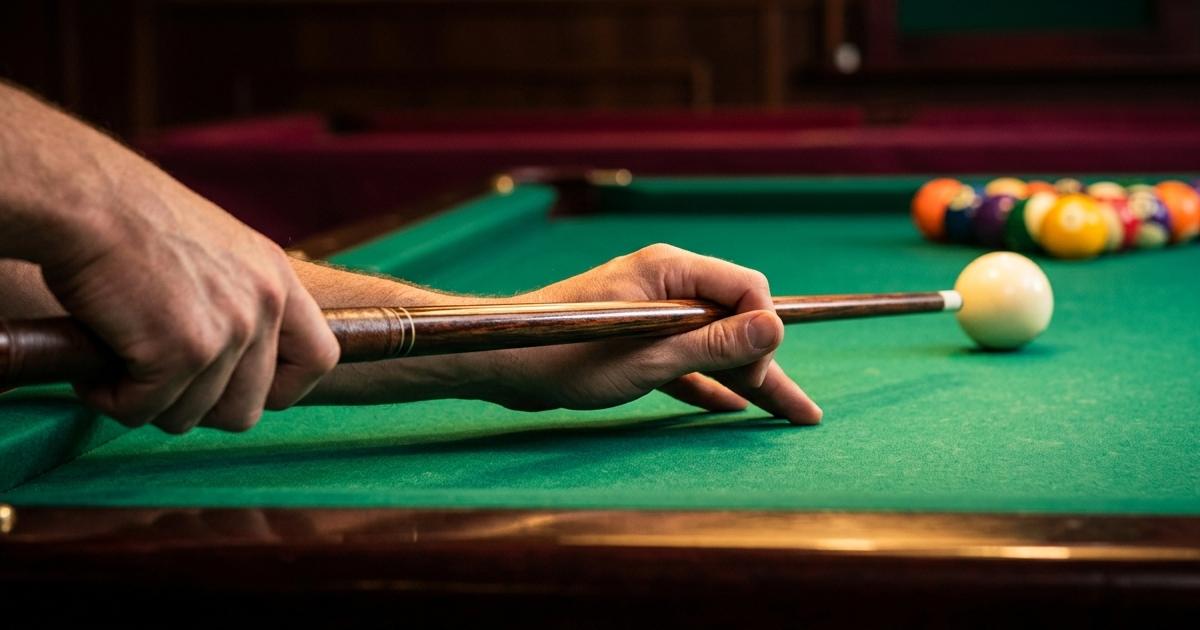
Your bridge hand is the one closest to the cue ball — the hand that the cue actually slides through during a shot. Its job is to create a stable, consistent channel for the cue so that it travels in a straight line every single time. There are two common bridge styles you'll encounter:
- The Open Bridge: Place your hand flat on the table, raise your knuckles slightly, and rest the cue in the V-shaped groove between your thumb and index finger. This is the easiest bridge for beginners to learn and offers great visibility of the cue ball.
- The Closed Bridge: Form a loop with your index finger over the cue while keeping it resting on your middle finger. This gives you more control and is preferred by more experienced players, especially for power shots.
- The Rail Bridge: When the cue ball is too close to the rail for your normal bridge, place your hand on the rail and rest the cue between your index and middle fingers. Every serious player needs this one in their toolkit.
- The Elevated Bridge: When you need to shoot over another ball, lift your bridge hand to angle the cue downward at the correct trajectory. This one takes practice but becomes second nature over time.
No matter which bridge you use, the golden rule is consistency. Practice the same bridge shape every single time so your muscle memory can lock in.
The Grip Hand: Loose but Controlled
This is where most players go wrong. The grip hand — your back hand — should feel relaxed, almost effortless. Think of holding a small bird: firm enough that it doesn't fly away, gentle enough that you're not squeezing the life out of it. If your knuckles are turning white, you're gripping too tight.
A tense grip hand causes all sorts of problems. It introduces unwanted torque into your stroke, causes the cue to deflect off its intended path, and leads to inconsistent follow-through. The cue should feel like an extension of your arm, not a weapon you're wrestling with. Let your wrist hang naturally, your fingers wrap loosely around the cue, and allow the weight of the cue to do a lot of the work for you.
Finding the Right Grip Position on the Cue
Where your grip hand is positioned on the cue is just as important as how you're holding it. Too far back and you lose control. Too far forward and your stroke becomes short and choppy. The sweet spot is typically about an inch or two behind the wrap — the textured section on the handle of the cue — when the cue tip is resting near the cue ball and your arm forms a roughly 90-degree angle at the elbow during the pendulum swing.
This 90-degree angle at the point of contact is a widely accepted benchmark because it gives your arm a full, natural range of motion during the stroke. Take a few practice swings before each shot to feel whether your arm is moving smoothly like a pendulum. If it feels awkward or forced, adjust your hand position slightly until it feels fluid.
The Pendulum Stroke: Putting It All Together
Once your bridge and grip are both dialed in, the actual stroke should feel almost automatic. The key concept here is the pendulum motion — your elbow stays relatively still, acting as a pivot point, while your forearm swings forward and backward smoothly. Your wrist stays relaxed and only adds a tiny bit of natural follow-through at the very end of the stroke.
Keep your chin low and close to the cue. Your eyes should be focused on the object ball and the contact point you're aiming for. Take a few slow, deliberate warm-up strokes before committing to the shot, then follow through past the cue ball after contact. Short, jabbing strokes are the enemy of accuracy. Long, smooth follow-through is your best friend.
Common Grip Mistakes and How to Fix Them
Even players who've been shooting pool for years can develop bad grip habits without realizing it. Here are some of the most common ones to watch out for, and what to do about them:
Gripping Too Tight
As we mentioned, a death grip on the cue is the single most common grip mistake we see at Diamond Billiards. It kills your stroke fluidity, causes deflection, and leads to inconsistent shot-making. The fix is simple but requires conscious effort — before every shot, consciously relax your grip hand. Shake it out if you need to. Take a breath. Then let your fingers drape gently around the cue rather than squeezing it.
Lifting the Bridge Hand During the Shot
Your bridge hand needs to stay glued to the table throughout the entire stroke, including the follow-through. Lifting it even slightly causes the cue tip to rise off its intended path and sends the cue ball somewhere you didn't want it to go. Focus on keeping your bridge hand heavy and stable even after the shot is complete.
Inconsistent Bridge Length
How far your bridge hand is from the cue ball matters. Too close and you sacrifice control; too far and you lose precision. A good general rule is to keep your bridge about six to eight inches from the cue ball. This distance gives you enough leverage for a smooth stroke while keeping the cue angle consistent.
Rushing the Stroke
Pool is a game of rhythm. Rushing your stroke — especially on pressure shots — throws everything off. Train yourself to take the same number of warm-up strokes before each shot. Many professional players take two to four smooth back-and-forth strokes before committing. Find your rhythm, stick to it, and you'll notice an immediate improvement in your consistency.
Practice Makes Permanent: Come Sharpen Your Skills at Diamond Billiards
Here's the thing about grip and stroke mechanics — reading about them is helpful, but real improvement happens at the table. And there's no better place to put these tips into action than at Diamond Billiards, the largest pool hall in Southwest Florida, right here in Cape Coral at 1242 SW Pine Island Rd, Suite 4.
We've got the tables, the atmosphere, and the community of players who love this game as much as you do. Whether you're working through the basics or trying to eliminate a persistent stroke flaw, getting reps in on quality tables makes a world of difference. Our pool leagues are also a fantastic way to get structured practice time while meeting other players who can offer feedback and encouragement along the way.
So next time you walk into Diamond Billiards, take a moment before you break to think about your grip. Loosen up that back hand, set your bridge firmly, and let that pendulum do its thing. You might just surprise yourself — and everybody else at the table. Call us at (239) 573-7665 to reserve a table or ask about our leagues and events. We'll see you on the felt.